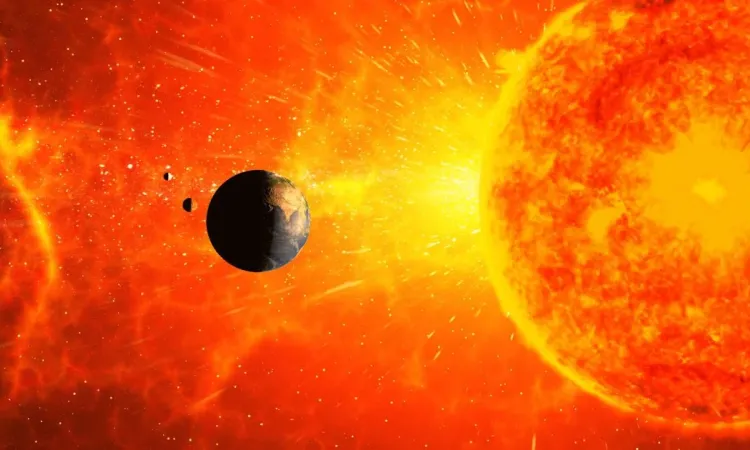
Increased solar and geomagnetic activity is expected on October 3–4, 2026, according to space-weather forecasts.
Geomagnetic activity is commonly monitored using the Kp index, which measures disturbances in Earth’s magnetic field. A Kp value of 5 corresponds to a G1, or minor, geomagnetic storm.
Forecasts can change as solar-wind conditions develop, so space-weather data are regularly updated and short-term forecasts are generally more reliable than predictions made further in advance.
Geomagnetic storms can affect some technological systems. During stronger periods of activity, possible effects include minor fluctuations in power grids, interference with some radio communications and satellite operations, and auroras becoming visible farther from the polar regions than usual.
Some people report headaches, fatigue, sleep disturbances or mood changes during periods of geomagnetic activity. However, scientific evidence has not established that minor geomagnetic storms directly cause these symptoms in otherwise healthy people.
Anyone experiencing persistent or severe headaches, unusual weakness, chest pain, dizziness or other concerning symptoms should not automatically attribute them to a geomagnetic storm and should seek appropriate medical advice.
Space-weather forecasts are subject to change as new observations become available.