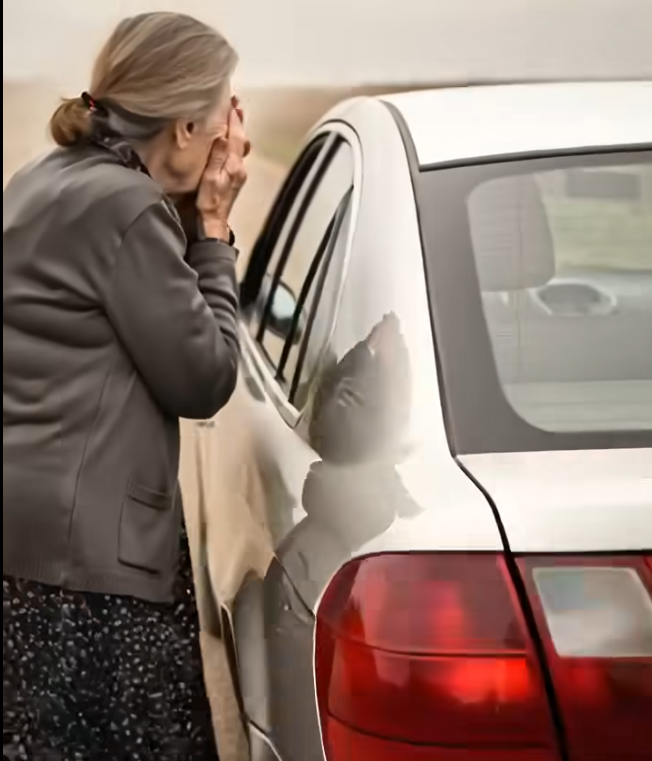
My name is Eleanor Grace Whitmore. I’m 68 years old. For nearly five decades, I was a wife, a mother, and the quiet heart of Hazelbrook Orchards, a small organic apple farm in Pennsylvania. My hands, though stiff with arthritis, still remember pruning trees at dawn with Richard, my husband. Three weeks ago, I buried him.
Richard and I had built everything together—this orchard, this home, this family. He died of pancreatic cancer, a brutal 14-month battle that stole his strength bit by bit. He didn’t want our children, Darren and Samantha, to know until the end. “Let them live their lives a little longer without the shadow,” he had whispered.
I had hoped grief would bring them back to us, that they would remember the love that built this house. But when they arrived for the funeral, I didn’t see children mourning their father. I saw professionals calculating an estate.
The morning after the funeral, I made coffee and waited at the kitchen table. They came downstairs dressed sharply, like they were heading to a business meeting.
“Mom,” Darren began, placing his mug down with practiced precision. “We’ve been talking. We think it’s time to start settling things. The estate, the business, the house.”
“It’s practical,” he continued. “You can’t run the orchard alone. And the house… it’s too much for someone your age.”
My age. The words sat heavy in the room. I had pruned those trees, handled payroll, driven tractors, and delivered crates to food banks for decades.
“We want you to be comfortable,” Samantha added, her voice smooth like a sales pitch. “There’s a wonderful retirement community two hours south, Sunnyvale Estates.”
Then Darren pulled out a folder. “Dad spoke to me about this last year,” he said, sliding a set of documents toward me. “He wanted Melissa and me to take over.”
I looked at the paper. It was printed on Darren’s corporate letterhead. Richard’s signature was on it—too steady, too perfect for a man in his final months. “This isn’t from our family lawyer,” I said.
“He was lucid when he signed it,” Darren insisted.
“There’s a developer interested,” Samantha said quickly. “Seven million for the land. We’d be set. You’d be cared for.”
A developer. They wanted to sell the orchard. Level it. Replace a lifetime of harvests with concrete and cul-de-sacs. “You’re talking about selling your father’s life’s work,” I said quietly.
https://googleads.g.doubleclick.net/pagead/ads?gdpr=0&us_privacy=1—&gpp_sid=-1&client=ca-pub-7496005598644614&output=html&h=280&adk=1572189175&adf=1207060577&pi=t.aa~a.2601865840~i.33~rp.4&w=714&abgtt=6&fwrn=4&fwrnh=100&lmt=1751712793&num_ads=1&rafmt=1&armr=3&sem=mc&pwprc=3546798629&ad_type=text_image&format=714×280&url=https%3A%2F%2Flifecollective.net%2F%3Fp%3D10934%26fbclid%3DIwY2xjawLV4zBleHRuA2FlbQIxMABicmlkETFCS2hleEhCellwR3BWdlljAR5EdCEDZWkv5K9_wVeHlON796mpx9w7c7Pc0lKVDXEpcJAAEET6uftI4WZ3Dg_aem_FxSCqRbaRoFltbZAGktmuw%23goog_rewarded&fwr=0&pra=3&rh=179&rw=714&rpe=1&resp_fmts=3&wgl=1&fa=27&uach=WyJXaW5kb3dzIiwiMTAuMC4wIiwieDg2IiwiIiwiMTM3LjAuNzE1MS4xMjAiLG51bGwsMCxudWxsLCI2NCIsW1siR29vZ2xlIENocm9tZSIsIjEzNy4wLjcxNTEuMTIwIl0sWyJDaHJvbWl1bSIsIjEzNy4wLjcxNTEuMTIwIl0sWyJOb3QvQSlCcmFuZCIsIjI0LjAuMC4wIl1dLDBd&dt=1751712787079&bpp=2&bdt=3661&idt=2&shv=r20250630&mjsv=m202507010101&ptt=9&saldr=aa&abxe=1&cookie=ID%3Da20d2df6b54aaf54%3AT%3D1751624078%3ART%3D1751712742%3AS%3DALNI_MY1bqYJ-m8lK99khSjJcsDMCv7WXw&gpic=UID%3D000010eb684d6314%3AT%3D1751624078%3ART%3D1751712742%3AS%3DALNI_MaDfopGIt6lVmE87Y08d9Xl9pLSHQ&eo_id_str=ID%3Dff8e821ac6b2bbc2%3AT%3D1751624078%3ART%3D1751712739%3AS%3DAA-AfjZrPtNGKcZpR6Kr_3Fied4T&prev_fmts=0x0%2C714x280%2C714x280%2C714x280%2C714x280%2C1150x280%2C714x280&nras=8&correlator=8165690797902&frm=20&pv=1&u_tz=240&u_his=3&u_h=900&u_w=1600&u_ah=860&u_aw=1600&u_cd=24&u_sd=1&dmc=8&adx=248&ady=4571&biw=1585&bih=773&scr_x=0&scr_y=1841&eid=31093234%2C42532524%2C95353387%2C95362656%2C95365225%2C95365235%2C95365112%2C95359265%2C95365119%2C95365797&oid=2&pvsid=5916627936018820&tmod=1775239260&uas=3&nvt=2&ref=https%3A%2F%2Fl.facebook.com%2F&fc=1408&brdim=0%2C0%2C0%2C0%2C1600%2C0%2C1600%2C860%2C1600%2C773&vis=1&rsz=%7C%7Cs%7C&abl=NS&fu=128&bc=31&bz=1&td=1&tdf=2&psd=W251bGwsW251bGwsbnVsbCxudWxsLCJkZXByZWNhdGVkX2thbm9uIl0sbnVsbCwzXQ..&nt=1&pgls=CAEaBTYuOC4x~CAEQBRoGMy4yOS4x&ifi=8&uci=a!8&btvi=6&fsb=1&dtd=6034
“Mom, be reasonable,” Darren replied. “The orchard can’t last forever.”
Something rose in me then, a slow, burning fury. I looked at both of them, my children. “Show me the will.”
He pushed the forged document forward again. I didn’t touch it. “I’m going to bed,” I said. “We’ll talk tomorrow.” But I knew there would be no tomorrow conversation. They were executing a plan.
The next morning, they were waiting by the door, coats on. A suitcase, not mine, sat beside them.
“We packed some essentials for you,” Samantha said brightly. “We thought we could drive you to Sunnyvale today. Just to look.”
“I’m not going to a retirement community,” I said.
Darren checked his watch. “Mom, be reasonable. The paperwork is done. We close with the developers next week. You can’t stay here.”
“This is my home.”
“It’s all of ours,” he said flatly. “Dad left the business to us. It’s time you let go.”
To avoid a fight, I told them I needed my medication and some family photos. Upstairs, I gathered my pills, but also something they didn’t know existed. Behind a panel in the medicine cabinet, I retrieved my passport and birth certificate. From a fireproof box hidden behind Richard’s old flannel shirts, I took the original deed to 20 acres of land, purchased in my maiden name before we were married. Land with water rights. Land essential to any future development.
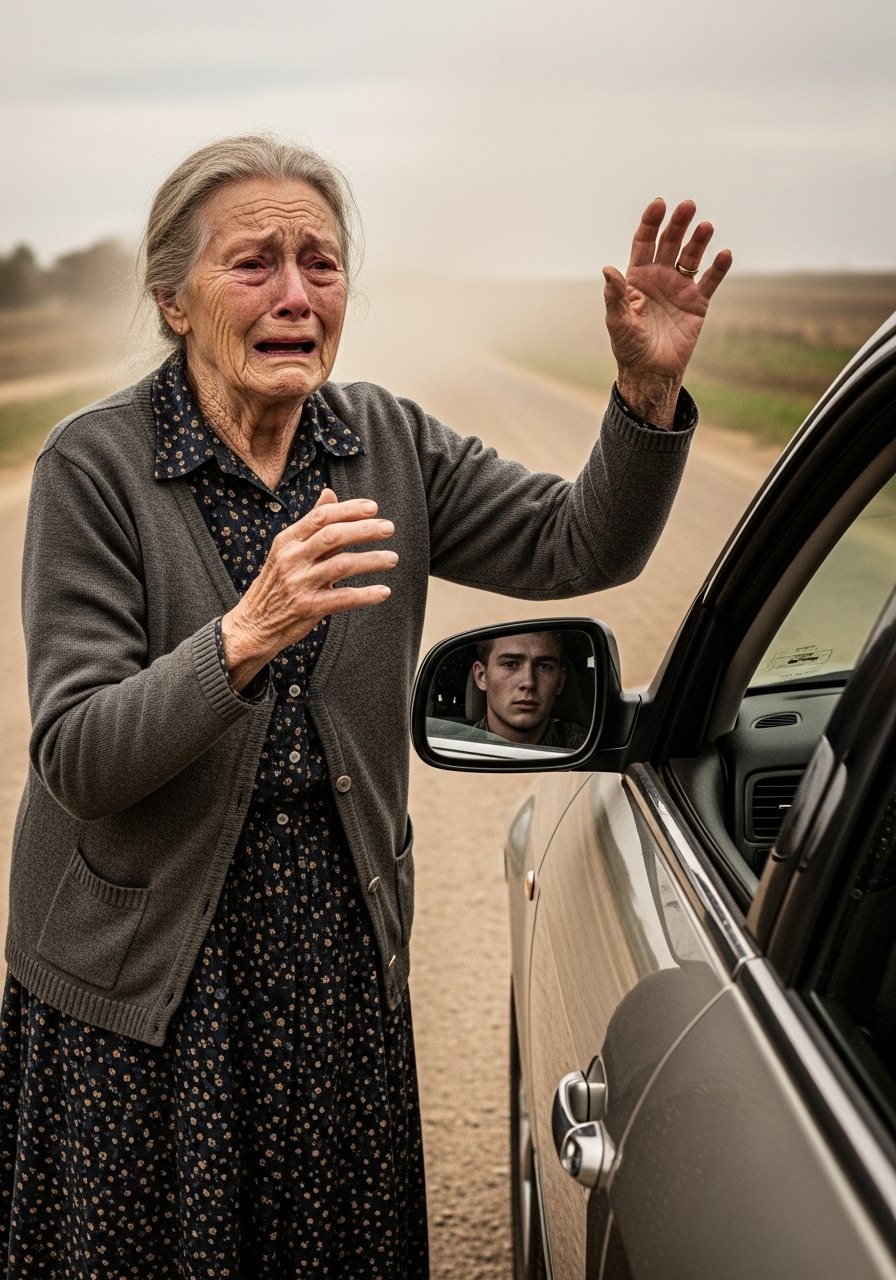
When I returned downstairs, my purse was heavier, but my heart was lighter. I let them believe I was defeated. We drove past the fields just beginning to bloom. But instead of taking the highway towards Sunnyvale, Darren veered onto a remote county road. Twenty minutes later, he pulled over beside an empty field.
“This is where you get off, Mom,” he said as casually as if he were announcing a stoplight.
Samantha’s smile faltered. “Darren, what?”