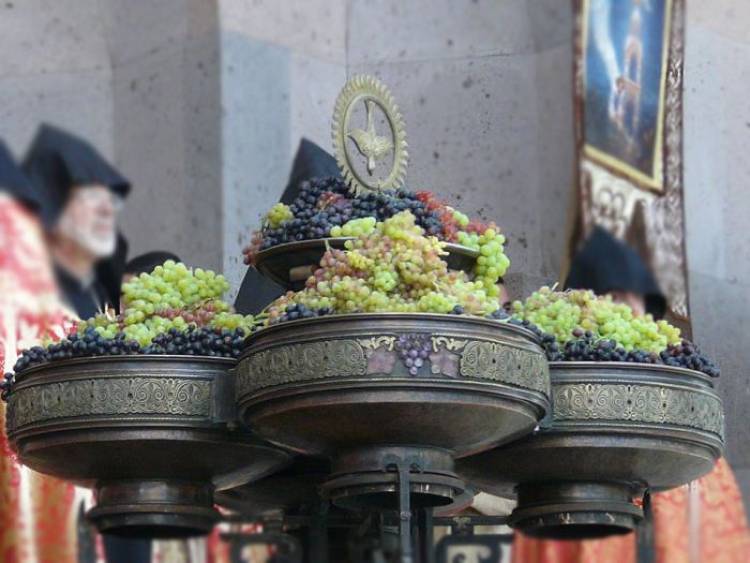
In Armenian tradition, many people avoid eating grapes before the Feast of the Assumption of the Holy Mother of God, one of the major feast days of the Armenian Apostolic Church. The celebration is commonly known as Blessing of the Grapes and is observed on the Sunday closest to August 15.
According to longstanding custom, grapes—the symbolic fruit of the feast—are not eaten before they have been brought to church and blessed. Only after the blessing ceremony are they traditionally placed on the family table and shared with relatives and guests.
The feast is also associated with gatherings and festive meals featuring seasonal fruits, with grapes holding a central place. In many communities, traditional Armenian pastries such as gata are served, and acts of charity, including sharing food with those in need, are encouraged as part of the celebration.
The holiday is widely regarded as a time to express gratitude for the year’s harvest, preserve cultural traditions, and strengthen community and family bonds. While customs may vary from one region or family to another, many Armenians continue to observe the tradition of waiting until the blessing before eating grapes.