
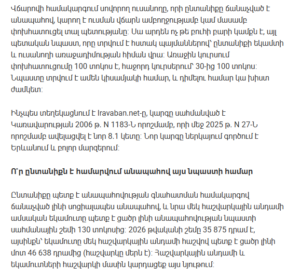
Students enrolled in paid higher education programs in Armenia may qualify for partial or full tuition fee compensation from the state if their families are officially recognized as socially disadvantaged.
Under the government regulations described in the eligibility framework, first-year students may receive 100% tuition compensation, while students in subsequent years may qualify for 30%, 60% or 100% coverage depending on their academic performance.
The financial assistance is provided for each semester and is subject to specific eligibility requirements and application deadlines.
The procedure is established under Armenian Government Decision No. 1183-N of 2006, as amended by Decision No. 27-N of 2025.
Which Families Are Eligible?
To qualify, a student’s family must be officially recognized as socially disadvantaged under Armenia’s social vulnerability assessment system.
In addition, the family’s monthly income per calculated household member must be below 130% of the income threshold established for the relevant social benefit.
For 2026, the stated threshold is 35,875 AMD.
This means that the applicable monthly income limit is approximately 46,638 AMD per calculated household member.
The calculation is based on the official methodology for assessing household income and determining the number of calculated household members, which may differ from simply dividing total income by the number of people living in the household.
How Much of the Tuition Fee Can Be Covered?
The amount of compensation depends on the student’s year of study and academic performance.
First-Year Students
Eligible students admitted to paid places in their first year may receive compensation covering 100% of the applicable tuition fee, subject to the government’s established maximum tuition limits.
The provision covers bachelor’s, continuous and integrated educational programs, as well as medical residency programs where applicable.
Second-Year and Subsequent Students
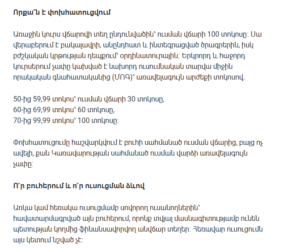
For students continuing their education, compensation is determined according to their average academic performance during the previous academic year.
Academic Performance
Tuition Compensation
50%–59.99% of the maximum grade
30%
60%–69.99% of the maximum grade
60%
70%–99.99% of the maximum grade
100%
The compensation is calculated using the tuition fee established by the university but cannot exceed the maximum amount set by the Armenian government.
Which Universities and Study Formats Are Covered?
The benefit applies to eligible students enrolled in accredited higher education institutions that have state-funded tuition-free places in the relevant field of study.
Both full-time and correspondence students may qualify.
The cited provision does not explicitly include fully remote education as a separate study format.
Students should confirm that their university and academic program meet the required conditions before applying.
How and When Should Students Apply?
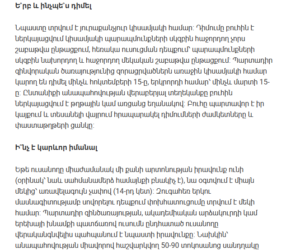
The financial assistance is granted separately for each academic semester.
For full-time students, applications must be submitted to the university within four weeks after the beginning of semester classes.
For correspondence students, the application period covers one week before and one week after classes begin.
Special deadlines apply to students discharged from compulsory military service:
October 15 for the first semester.
March 15 for the second semester.
Applicants must provide documentation confirming their family’s socially disadvantaged status. The relevant certificate may be submitted in paper or electronic form.
Universities are required to publish application deadlines and the list of necessary documents on their official websites and in visible locations.
Can Students Receive Several Tuition Benefits at Once?
Students who qualify for multiple tuition-related benefits cannot receive all of them simultaneously.
For example, a student who qualifies both because of their family’s financial circumstances and because they live in a border community may use only one benefit — the one providing the highest level of support.
Students enrolled in two academic programs at the same time may receive tuition compensation for only one program.
The regulations also provide for the preservation of eligibility in certain circumstances when students resume their education after an interruption caused by compulsory military service, academic leave or childcare responsibilities.
What About the Previous Tuition Compensation System?
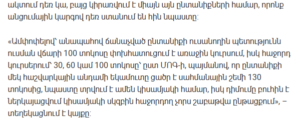
The regulations also contain provisions from the earlier social vulnerability scoring system, under which tuition compensation ranged from 50% to 90%.
However, those provisions continue to apply only to families covered by the relevant transitional arrangements.
The newer income-based eligibility requirements apply to families assessed under the updated system.
What Should Students Remember?
The most important point is that eligible first-year students may receive full tuition compensation, while students in subsequent years may receive 30%, 60% or 100%, depending on their academic results.
However, eligibility is not automatic. Students must meet the income and educational requirements, submit the necessary documents and comply with the university’s application deadlines.
Because the assistance is provided on a semester-by-semester basis, students should check the requirements for each application period rather than assume that an earlier approval guarantees future payments.
Applicants are encouraged to contact their university’s student affairs or financial assistance department to confirm the applicable deadlines, required documents and eligibility conditions.
Note: The information reflects the cited government regulations and the stated 2026 income threshold. Students should consult their university or the relevant Armenian authorities for the latest official requirements and any subsequent amendments.