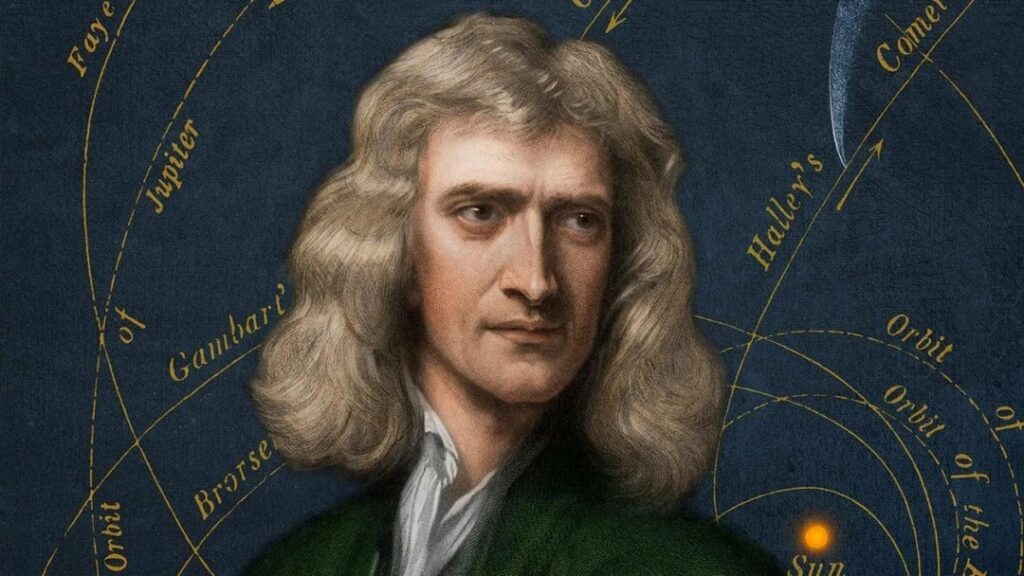

Isaac Newton, best known for his groundbreaking work in physics and mathematics, also devoted a considerable part of his life to theology, biblical chronology and the interpretation of prophecy.
Among his surviving manuscripts is a calculation involving the year 2060, which is sometimes described as Newton’s prediction for the “end of the world.” However, his writings were more nuanced: Newton did not claim that Earth would necessarily be destroyed in 2060.
The 1,260-Year Calculation
Newton studied prophetic passages in the Book of Daniel and other biblical texts. One element of his interpretation involved a prophetic period of 1,260 days, which he understood symbolically as 1,260 years.
For one of his calculations, Newton used AD 800 as the starting point. This was the year in which Charlemagne was crowned emperor in Rome.
Adding 1,260 years to 800 produced the year 2060.
Did Newton Predict the World Would End in 2060?
Not exactly. Newton wrote that the prophetic period “may end later, but I see no reason for its ending sooner.” His calculation was therefore closer to establishing an earliest possible date within his theological interpretation than predicting a guaranteed event in 2060.
He was also critical of attempts to repeatedly set dates for the end times, believing failed predictions could undermine confidence in biblical prophecy.
Newton’s theological writings envisioned major changes in the existing world order and the beginning of a new religious era rather than a scientifically predicted physical destruction of planet Earth.
Therefore, 2060 should not be regarded as a scientific forecast made by Newton. It came from his personal interpretation of biblical prophecy and has no basis in modern scientific predictions about the future of Earth.