It was just another weekday evening. The subway rumbled along the tracks, filled with the usual blend of silence, screen-gazing, and soft chatter. I sat by the window, half-lost in my thoughts.
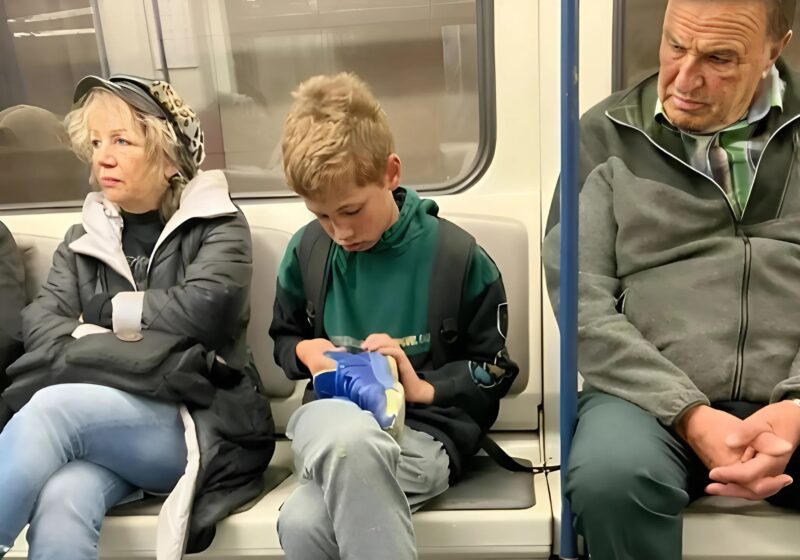
At the next stop, the doors slid open and in walked a boy—maybe ten years old. He looked like he’d darted out of school in a hurry. His hair was tousled, his clothes wrinkled, and he clutched a single, beat-up sneaker in one hand. The other foot was bare except for a thin, worn sock. Quietly, he slid into a seat between two passengers, trying his best to disappear into the background.
But people noticed.
Some turned quickly back to their phones. Others threw glances—judgmental, disapproving—and then looked away, pretending they hadn’t seen him. But the man sitting on the boy’s right wasn’t like the rest.
He wore workman’s clothes—paint-smeared jeans, a thick jacket, scuffed boots. His eyes kept drifting to the boy’s feet. Then to the bag at his own feet. He seemed to be weighing a decision.
One stop passed. Then two. On the third, he leaned forward slightly, cleared his throat just loud enough to break the stillness, and said something that made everyone freeze.
“Hey, kid. I bought these sneakers for my son. But he’s got another pair that still fits. I think you need these more.”
He reached into his bag, pulled out a shoebox, and opened it to reveal brand-new, blue sneakers, tags still on.
The boy stared—first at the shoes, then at the man, then back at the shoes. Slowly, he slid his bare foot in. A perfect fit.
His face lit up, a quiet smile breaking through his shy demeanor.
“Thank you,” he murmured.
The man gave a small nod and said simply, “Just pass it on someday.”
At the next stop, the boy stepped off—his posture taller, his steps lighter. Wearing brand-new shoes and carrying something far more valuable: a renewed belief that kindness still exists in the world.